Sonia Says: Social Media Coach, Marketing Consultant

Consultant, coach & creator supporting media, nonprofits & startups. Helping you grow, connect & stand out.

  • What digital leaders are predicting for 2026: AI, Trust, Community & Brand

    As we head into 2026, digital leaders aren’t talking about incremental shifts — they’re talking about transformation across media, tech, and audience behavior.

    The Nieman Lab asked digital leaders across major organizations to predict what’s coming in 2026. Here are the trends shaping the year ahead:

    🔹 1. AI Is Everywhere — But It’s a Double-Edged Sword

    AI isn’t just a tool — it’s redefining how content is created, discovered, and delivered. Expect:

    • Endless AI-generated writing that outpaces human output, challenging attention and value creation. Nieman Lab
    • Newsrooms becoming more efficient and personalized — if they can balance automation with trust. Nieman Lab
    • Local news being reinvented as AI players integrate and even invest in local reporting. Nieman Lab

    💡 Takeaway: AI will be core to workflow and production — but not a replacement for human judgment.

    🔹 2. Trust, Authenticity & Cultural Fluency Are the New Currency

    In a world drowning in generic content:

    • Cultural fluency — understanding audiences deeply — becomes essential. Nieman Lab
    • Trust matters more than volume, pushing media to focus on real connections and context — not just clicks.

    💡 Takeaway: Brands and creators that reflect lived experience build real audience loyalty.

    🔹 3. Loyalty > Scale

    Big numbers won’t matter as much as meaningful relationships:

    • Media players emphasize direct engagement and loyal communities, not just broad reach. Nieman Lab
    • “Audience” becomes community — a group with shared values, not just eyeballs.

    💡 Takeaway: 2026 is about sustaining attention, not fragmenting it.

    🔹 4. Brands Are Becoming Their Own Distribution

    With platforms shifting and algorithmic discovery less predictable:

    • Strong brands will be the anchor for engagement and monetization. Nieman Lab

    💡 Takeaway: Identity and brand ethos will be the new competitive advantage.

    🔹 5. Talent Moves Toward Creator-Driven Models

    • Vertical video specialists and individual creators gain influence within organizations. Nieman Lab
    • Investments shift from generic publisher models to creator-centric ecosystems. Nieman Lab

    💡 Takeaway: People matter more than publications.

    Conclusion:
    2026 isn’t about more content — it’s about meaningful, trustworthy, and community-driven experiences powered by AI but anchored in human insight. Digital leaders aren’t just adapting to change — they’re building the next rules of engagement.
  • The social media reality check newsrooms need in 2026

    Everyone keeps saying Facebook is dead.

    The data says otherwise.

    If your newsroom needs a New Year’s resolution, here’s one: stop building digital strategies based on assumptions — and start building them on audience behavior.

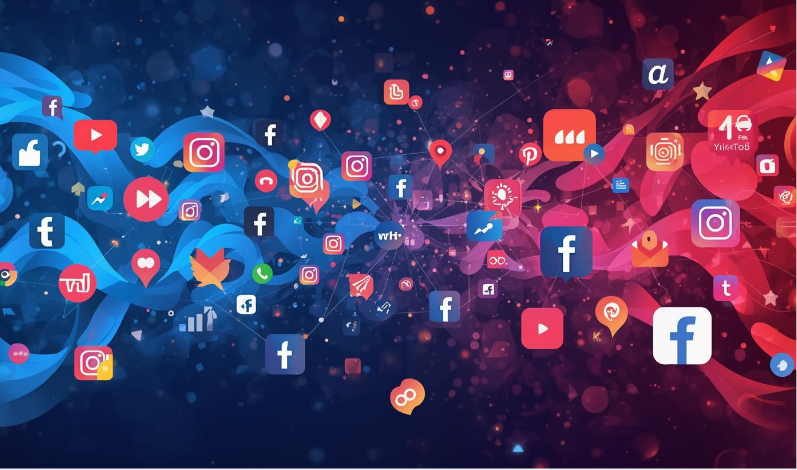
    According to Nov. 2025 report of Americans social media use in 2025 from the Pew Research Center, YouTube remains the most widely used social platform in the United States, with Facebook close behind. Instagram now reaches about half of all U.S. adults. Meanwhile, platforms like TikTok, Reddit, and Snapchat continue to grow — but their strength is audience-specific, not universal.

    This isn’t about defending any one platform. It’s about confronting a hard truth many newsrooms still avoid:

    The problem isn’t that audiences left. It’s that strategies didn’t evolve with them.

    The Myth of the “Dead” Platform

    For years, Facebook has been written off in media circles as irrelevant or past its prime. And yet, Pew’s data shows it remains one of the most-used platforms among U.S. adults — especially older audiences who still make up a significant portion of local news consumers.

    YouTube tells a similar story. It’s not flashy or new, but it dominates reach and daily usage. And while Instagram continues to grow, its audience makeup and engagement patterns are very different from TikTok or Snapchat.

    The takeaway is simple:

    • Mass reach still lives on so-called legacy platforms
    • Growth platforms are powerful — when used intentionally
    • No single platform can carry your entire digital strategy

    One Audience, Many Platforms

    Pew’s research makes one thing crystal clear: social media is not one audience. It’s many.

    Platform usage varies widely by age, gender, education level, and race. Younger audiences over-index on TikTok, Instagram, and Snapchat. Older adults are far more likely to use Facebook and YouTube regularly. Reddit and X attract niche, highly engaged users, but not at scale.

    Yet many newsrooms still publish the same content, in the same format, across every platform — then wonder why engagement is flat.

    Distribution without differentiation is not strategy.

    Why Daily Habits Matter More Than Trends

    One of the most overlooked insights in Pew’s data is frequency of use. It’s not just about who has an account — it’s about where people show up every day.

    Daily habits are where loyalty, trust, and repeat engagement are built. That matters deeply for journalism.

    If your newsroom is chasing the newest platform while ignoring where your audience already spends time, you’re trading consistency for novelty.

    What This Means for Newsrooms in 2026

    Here’s the uncomfortable but necessary reset:

    • Stop letting platform hype dictate editorial priorities
    • Audit where your audience actually engages — by platform and by age
    • Match content formats to user behavior, not newsroom convenience
    • Measure success by meaningful engagement, not vanity metrics

    HOT TAKE: If your digital strategy is based on vibes instead of data, it’s time for a reset.

    The future of news isn’t about abandoning platforms. It’s about using them with intention.

    Because attention didn’t disappear — it just moved.

    And the newsrooms willing to follow it will be the ones that grow.

    Source: Social Media Fact Sheet (Pew Research Center, Nov. 2025)

    Report: America’s Social Media Use 2025 (Pew Research Center, Nov. 2025)

  • Why brands are finally treating storytelling as a core business function

    Something stood out to me this week that gets at a shift happening across how organizations think about brand and audience connection.

    The Baltimore Ravens recently posted a job description for a Head of Corporate Communications that caught my eye — not because it was about football, but because of how it framed the role:

    “This individual will play a critical role in crafting the organization’s voice for non-football initiatives, coordinating message strategy and driving storytelling around business growth, fan experience, community engagement, sponsorships, and culture…”

    Read that again.

    This isn’t about wins and losses. It’s about voice. It’s about connection beyond the product.

    Having spent time in Baltimore, I can tell you that the Ravens live far beyond the scoreboard. They show up in neighborhoods, in civic pride, in everyday conversations. You don’t build that kind of loyalty from ads — you build it with meaning.

    The Strongest Brands Are Investing in Human Storytelling

    Today’s best-in-class brands are telling stories that emphasize:

    • Community and culture
    • Experiences beyond the core product
    • Purpose-driven growth
    • Partnerships that matter
    • People and values behind the brand

    And here’s the thing: this isn’t isolated to sports.

    Weeks ago, The Wall Street Journal highlighted a broader trend — organizations across industries are hiring storytellers because they recognize narrative, voice, and trust are now core business functions, not optional marketing add-ons.

    Why This Matters Right Now

    In social media right now:

    • Algorithms change frequently
    • Paid strategies rise and fall
    • But authentic connection continues to outperform both

    This isn’t a trend — it’s a correction.

    Brands are waking up to a simple truth: audience trust, context, and credibility matter just as much as reach. And long-term loyalty only comes when your audience feels seen, understood, and genuinely connected to your narrative.

    The Ravens were just bold enough to say it out loud. Others will follow.

  • When everything looks real, trust becomes the strategy

    Recently, Instagram’s Adam Mosseri put words to a shift many creators, journalists, and media leaders have already been navigating:

    In a world increasingly filled with AI-generated content, authenticity is no longer assumed.

    That statement landed for a reason. Not because it introduced something new, but because it confirmed something fundamental about where media is headed.

    This isn’t an algorithm update.
    It’s a trust reckoning.

    This Shift Didn’t Start With AI

    Long before generative tools became widely accessible, audiences were already recalibrating how they decide what and who to believe.

    We’ve seen it in:

    • Journalists being questioned not just on facts, but framing
    • Creators building influence without institutional backing
    • Audiences following people across platforms, not brands within them

    AI accelerated the timeline, but it didn’t change the underlying behavior.

    When content becomes easy to produce, credibility becomes harder to earn.

    Authenticity Is No Longer a Differentiator

    For years, “be authentic” has been treated like advice.

    Today, it’s a baseline.

    If anyone can generate a convincing image, video, or caption, authenticity stops being about aesthetics or tone. It becomes about consistency, context, and intent.

    Audiences are asking different questions now:

    • Does this person sound like themselves over time?
    • Do their takes align with what they’ve said before?
    • Are they explaining why something matters, not just what happened?
    • Do they show their thinking, or just the outcome?

    Trust is being built or lost in the margins.

    What This Means for Creators and Journalists

    The creators who will grow in this next phase aren’t the most polished or the fastest to adopt new tools. They’re the ones who make their credibility legible.

    That looks like:

    • Explaining your perspective, not just posting conclusions
    • Showing process, not just performance
    • Speaking in a voice that sounds human, even when discussing complex ideas
    • Being accountable to your audience, not just optimized for reach

    This is especially true for journalists, who are no longer operating as one-way distributors of information. Journalism now lives inside a relationship one that requires transparency and responsiveness.

    Why I’ve Always Focused on Trust First

    My background in newsroom leadership shaped how I see this shift.

    In newsrooms, trust isn’t abstract. It shows up in:

    • Whether audiences return
    • Whether they believe you in moments of uncertainty
    • Whether they share your work when it actually matters

    Those same dynamics now apply to creators and media brands online.

    That’s why I’ve always advised teams to prioritize:

    • Credibility over polish
    • Context over clicks
    • Relationships over reach

    Platforms may change. Formats will evolve. Tools will improve.

    Human behavior is far more consistent.

    The Takeaway

    When everything looks real, trust becomes the strategy.

    Not as a slogan, but as a daily practice.

    The creators, journalists, and leaders who understand this won’t just survive the next phase of media. They’ll shape it.

    What I’m Watching Next

    • How platforms surface signals of credibility
    • How audiences reward consistency over novelty
    • How journalists redefine authority in public spaces

    These are the questions behind Sonia Says — and the lens I’ll keep using to make sense of where media is going next.

  • Digital teams are the newsroom

    DIGITAL TEAMS ARE THE NEWSROOM. Yeah, I said it.

    In many newsrooms I’ve worked in, and in conversations across the industry, there’s STILL a divide between digital teams and the rest of the newsroom.

    And as we head into 2026, it doesn’t make sense.


    Digital platforms now reach the majority of the audience, yet they’re still treated like an add-on instead of a core part of the news team.

    You hear it in moments like:
    “I sent my script and it didn’t go up fast enough.”
    “I did a vertical video but it wasn’t shared on the brand account.”
    “I tagged the brand but it wasn’t reshared.”

    To me, these aren’t platform problems. They’re collaboration problems.

    The newsrooms that perform best don’t treat digital as a final step — they bring those teams in early.

    When that happens, stories travel further, engagement improves, and journalists feel less stretched trying to do everything themselves.

    I shared a simple collaboration checklist on Instagram today — but I’m curious:
    What’s one thing your newsroom does well when it comes to digital collaboration?

  • Authenticity builds audiences on social media

    A friend asked me today how to grow a following.
    My answer surprised her: stop trying to look perfect.


    I was talking with a friend who owns a small business. She’s struggling to grow her social following and keeps comparing herself to creators with hundreds of thousands of followers.

    Here’s the part people forget: Those beautifully curated pages didn’t start that way. They were built on authenticity first then the polish came later.

    To get someone to hit “follow,” you have to connect with them.
    To get them to buy? That connection has to feel real.

    Personally, I don’t connect with overly curated content.
    Maybe it’s the journalist in me, but I want to see real people doing real things. When I relate, I follow and I stay.

    That’s why I keep encouraging journalists and business owners to try reels.
    Right now, vertical video is still being pushed — and it’s one of the easiest ways to reach new people.

    Yes, showing your face can feel uncomfortable.
    Yes, people worry about what strangers might say.
    But here’s the truth: most people are rooting for you — and the ones who aren’t shouldn’t get to control your voice.

    You don’t need a perfect reel. You need a starting point.

    A short clip.
    A moment from your day.
    Something real.
    The polish can come later.

  • Is journalism dead?

    “Is journalism dead?”

    I hear this question a lot especially about local TV news.

    Here’s my honest take:
    Traditional journalism is dead.
    But journalism itself? Very much alive.

    For decades, news was a one-way street. Journalists decided how a story was told, audiences consumed it, and that was the end of the exchange. Authority flowed in one direction.

    That world no longer exists.

    Today, journalism is a relationship.
    It’s a conversation between reporter and audience: one built on transparency, trust, and accountability.

    Viewers and readers now ask:
    • Why did you choose this angle?
    • Who are your sources?
    • What did you leave out?
    • Did you actually get to the root of the issue?

    And they expect answers.

    If you’re still producing or reporting as if journalism is a broadcast AT people instead of a dialogue with them, you’re reinforcing the idea that journalism is dying.

    But if you understand that journalism now requires listening, responding, and engaging — then journalism isn’t dead at all.
    It’s evolving.

    The real question isn’t “Is journalism dead?”
    It’s: Are we willing to change how we practice it?

    Curious how others see this. Is journalism dying — or just being reshaped?

  • Instagram is letting you choose your algorithm… and I have thoughts

    Instagram quietly rolled out a new feature earlier this month.

    You can now customize your Reels algorithm based on themes and interests.
    Not just “hide this,” but actually tell Instagram what lanes you want more of.
    And here’s the thing…

    This is both amazing and slightly concerning — depending on how you look at it.


    ⭐ THE GOOD: We finally get some control back.
    If you want more cooking, journalism explainers, Pilates, skincare, book talk — whatever — you can actually shape what shows up. Reels suddenly feels less like the Wild West and more like a curated experience.

    👎 THE BAD: We’re actively choosing our bubbles now.
    If you don’t select news, local issues, or anything outside your comfort zone… it may never reach you. And that has big implications for how people stay informed — or don’t.

    And here’s where this gets real for creators and journalists:

    If audiences can handpick their interests, then:
    – Content has to earn its way into those categories
    – Discovery becomes harder unless someone deliberately selects your topic
    – “General audience reach” may shrink
    – Packaging matters even more — clear themes, repeatable value, recognizable angles
    – Journalists may have to rethink how they surface need-to-know information to people who aren’t actively seeking it

    This update gives users control… But it also raises a bigger question:
    What happens when we only choose the content that feels comfortable?

    And what gets lost when important information doesn’t fit neatly into a chosen “theme”?

    I’m watching this closely — because this shift isn’t just about Reels. It’s about how information finds us in 2026.

  • Simple digital strategies are sometimes the smartest ones

    The smartest digital strategies right now are the simplest ones.

    With shrinking teams, tighter timelines, and more platforms than ever, complexity isn’t a badge of honor: clarity is.

    I’ve seen over and over that the teams that win at digital aren’t the ones with the biggest budgets. They’re the ones who:

    ✨ Know exactly who they’re creating for
    ✨ Have repeatable formats that reduce decision fatigue
    ✨ Build workflows that protect creativity, not crush it
    ✨ Measure what matters (not everything that moves)
    ✨ Empower their teams to experiment without fear

    Simplicity isn’t about doing less. It’s about doing the right things consistently and intentionally.

    In 2025, digital leadership is less about chasing every trend and more about focusing on what builds trust, engagement, and long-term connection.

    What’s one thing you’ve simplified in your digital strategy that made a difference?

  • Leadership lessons: Managing a newsroom through high-pressure moments

    Leading a news team through high-pressure moments teaches you a lot about people.

    When you’ve managed a team of 200+ people during breaking news, high-stress cycles, HR challenges, and moments where the stakes feel sky-high… you learn what real leadership looks like.

    Here’s what’s stayed with me:
    🧭 Clarity beats speed. In a crisis, people don’t need noise. They need direction.
    🤝 Check on your team, not just the work. Burnout hides in silence.
    🧩 Assign strengths, not just shifts. The right person in the right moment changes everything.
    🔄 Debriefing matters. It’s how teams grow, recover, and trust each other more.
    💬 And morale isn’t a “nice to have.” It’s mission-critical — especially when everyone is running hot.

    News is demanding. But leading people through it? That’s the real job — and the part I care most about.

    What’s one leadership lesson that’s stuck with you?